When Satya Nadella became Microsoft’s third chief executive in February 2014, the company was profitable, enormous and widely described as having missed the move to mobile. A decade later it was one of the most valuable companies in the world, built around cloud services and artificial intelligence. The products changed, but the more instructive part of the story is what changed first: how the company decided, argued and learned.
An engineer who came up through the back office
Nadella joined Microsoft in 1992 and spent much of his career in the businesses customers rarely see: servers, developer tools and, later, the cloud and enterprise group that ran Azure. That background matters. He arrived in the top job already convinced that the company’s future lay in infrastructure sold to other businesses, rather than in defending the Windows desktop.
Culture before strategy
His best-known early move was not a product but a vocabulary. Nadella borrowed the psychologist Carol Dweck’s idea of a growth mindset and asked a famously competitive company to value learning over being right. Internal rivalry gave way, at least in part, to collaboration across divisions. In his 2017 book Hit Refresh he described the cultural shift as the precondition for everything else.
The practical consequences were visible quickly. Microsoft put Office on rival platforms, embraced Linux and open-source software it had once fought, and treated partners as partners. Each of those decisions made commercial sense only if the company stopped measuring itself by Windows.
Bets that compound
The acquisitions followed the same logic: LinkedIn in 2016, GitHub in 2018 and Activision Blizzard, completed in 2023 after a long regulatory review. So did the early and much-enlarged investment in OpenAI, which put Microsoft at the centre of the generative-AI boom and turned Azure into the platform many enterprises use to run it. Nadella became chairman of the board in 2021.
What other leaders can take from it
- Fix how decisions are made before choosing what to decide. A strategy that depends on teams sharing work will fail in a culture that rewards hoarding it.
- Let go of the measure you grew up with. Microsoft’s turn required treating its most famous product as one business among several.
- Make partnerships do real work. The OpenAI relationship gave Microsoft speed it could not have built alone, at the price of depending on another organisation’s choices.
For technology leaders inside large organisations, the lesson is uncomfortable and useful: the platform you modernise matters less than whether the people around it are allowed to learn in public.
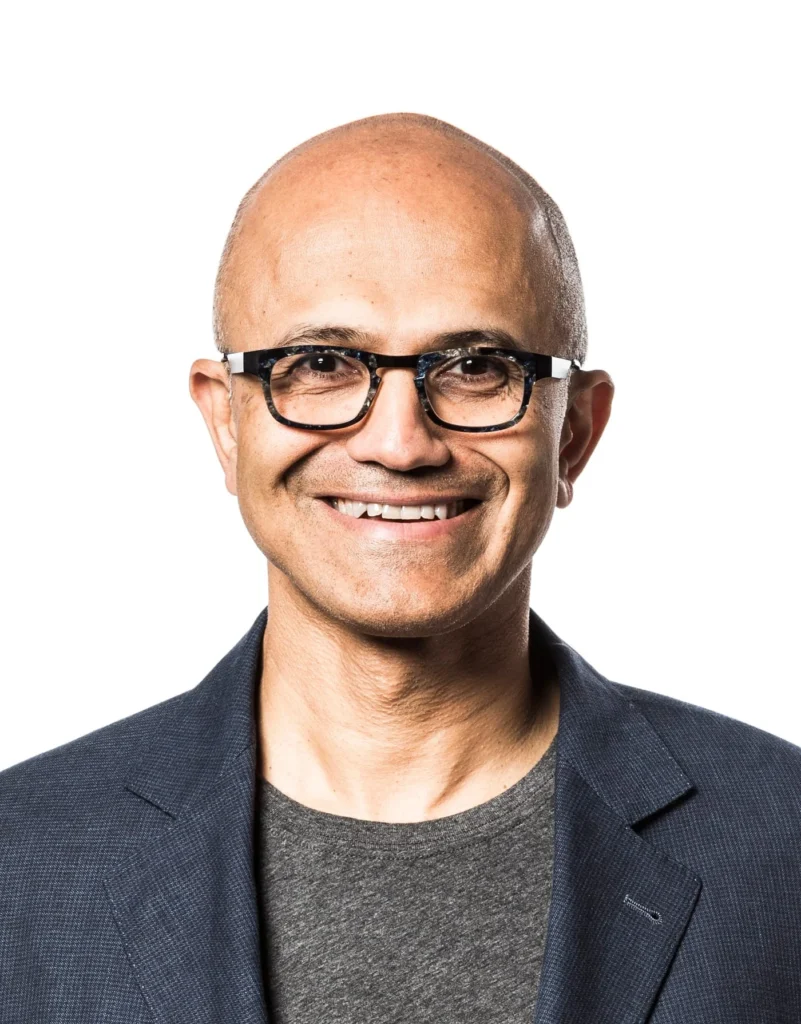
This is an analysis by The CIO Table’s editors based on public information; it is not an interview. Photograph: Brian Smale and Microsoft, Wikimedia Commons, CC BY-SA 4.0, resized.