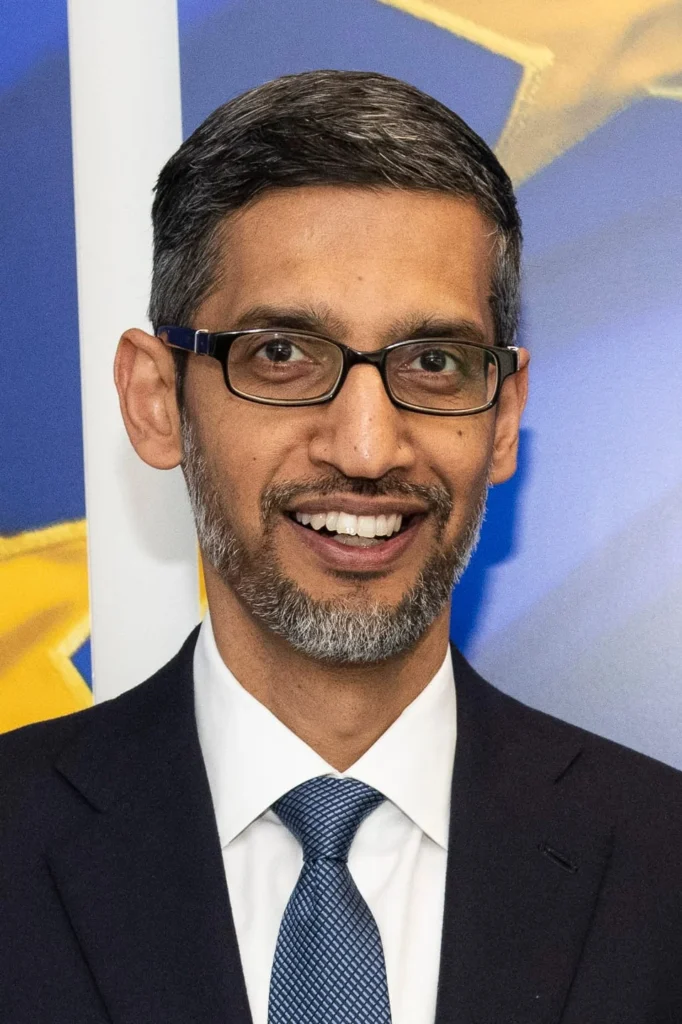
In 2016, a year after becoming Google’s chief executive, Sundar Pichai said the company would move from being mobile-first to AI-first. It was an easy line to say and a hard one to live by. Being AI-first meant reorganising research, rebuilding products around new models and, eventually, putting at risk the search business that pays for almost everything else.
A product manager’s path to the top
Pichai grew up in Chennai, studied at IIT Kharagpur, Stanford and Wharton, and joined Google in 2004. He made his name on products used by billions: the Chrome browser, launched in 2008, and later Android. He became chief executive of Google in 2015 and of its parent, Alphabet, in 2019. Colleagues and observers tend to describe a consensus-builder rather than a showman.
When the research lead is not enough
Google researchers published much of the work the generative-AI boom is built on, including the transformer architecture in 2017. Yet when chatbots reached the public in late 2022, Google was widely seen as slow to ship. Pichai’s response was structural: in 2023 Alphabet merged its two research groups, Google Brain and DeepMind, into a single unit, and the company began releasing its Gemini models across search, workspace tools and Android.
The tension is real. AI answers can reduce the clicks that make search advertising work, and Google has faced major antitrust cases over its search business in the United States. Leading through that means protecting a cash machine while building what may replace it.
What other leaders can take from it
- Inventing something is not the same as shipping it. Research leadership only counts once it reaches customers.
- Merge teams that compete for the same future. Two strong groups pulling in different directions can be slower than one.
- Name the business you might cannibalise. Saying it openly is the first step to managing it rather than defending it.
Most technology leaders will never run a company the size of Alphabet, but many face the same question on a smaller scale: which of our profitable processes will AI make obsolete, and are we willing to replace them ourselves?
This is an analysis by The CIO Table’s editors based on public information; it is not an interview. Photograph: Lukasz Kobus, European Commission, Wikimedia Commons, CC BY 4.0, resized.